
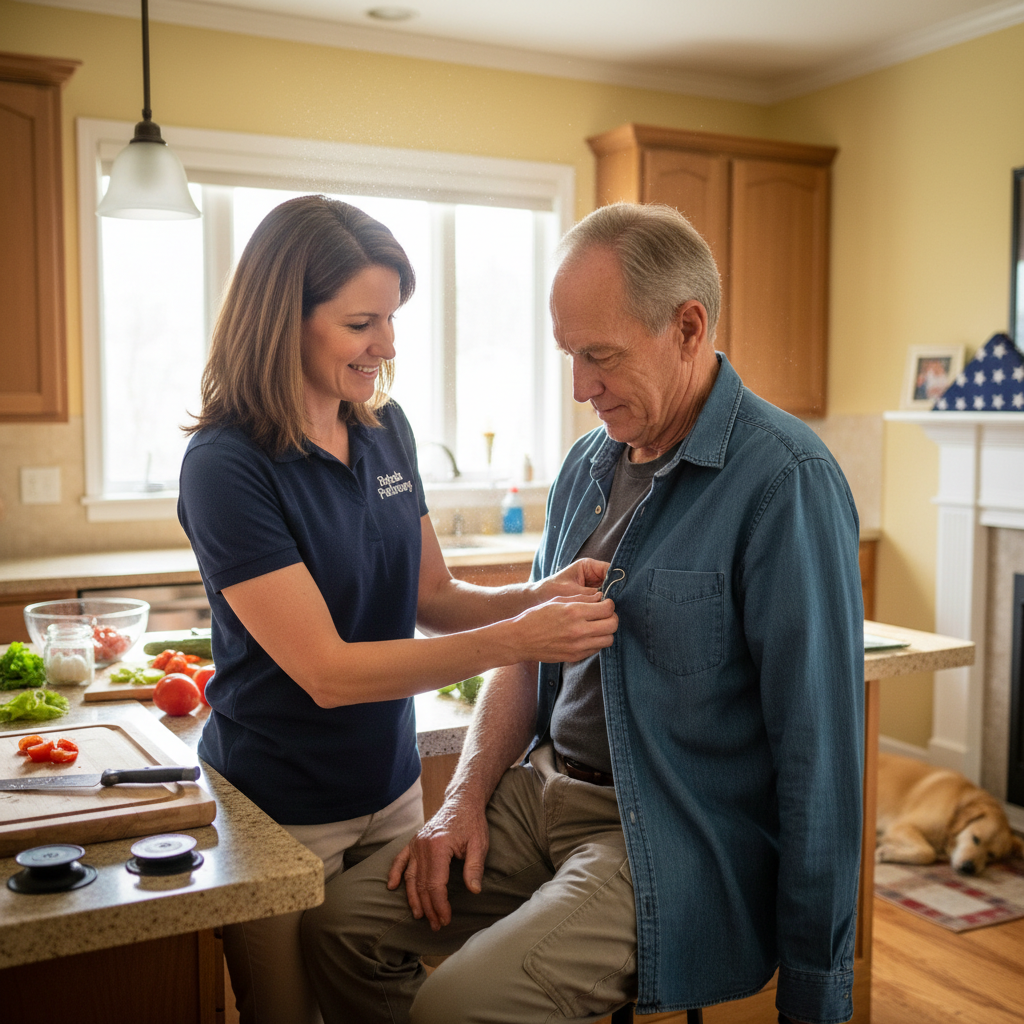
Veterans with COPD, chronic respiratory failure, or post-acute pulmonary needs often do better when respiratory care is delivered where symptoms actually occur: at home.
A licensed respiratory therapist can manage oxygen setup and safety, monitor tolerance with activity, reinforce inhaler and nebulizer technique, and guide airway clearance practices. For higher-acuity patients, ventilator support and monitoring may also be part of the plan.
Education is central to success. Veterans and caregivers are coached on red-flag symptoms, equipment troubleshooting, and when to escalate care. This lowers avoidable emergency utilization and supports better day-to-day control.
Coordinated respiratory therapy, paired with nursing and rehab disciplines, helps veterans stay stable, conserve energy, and maintain quality of life in a familiar setting.